
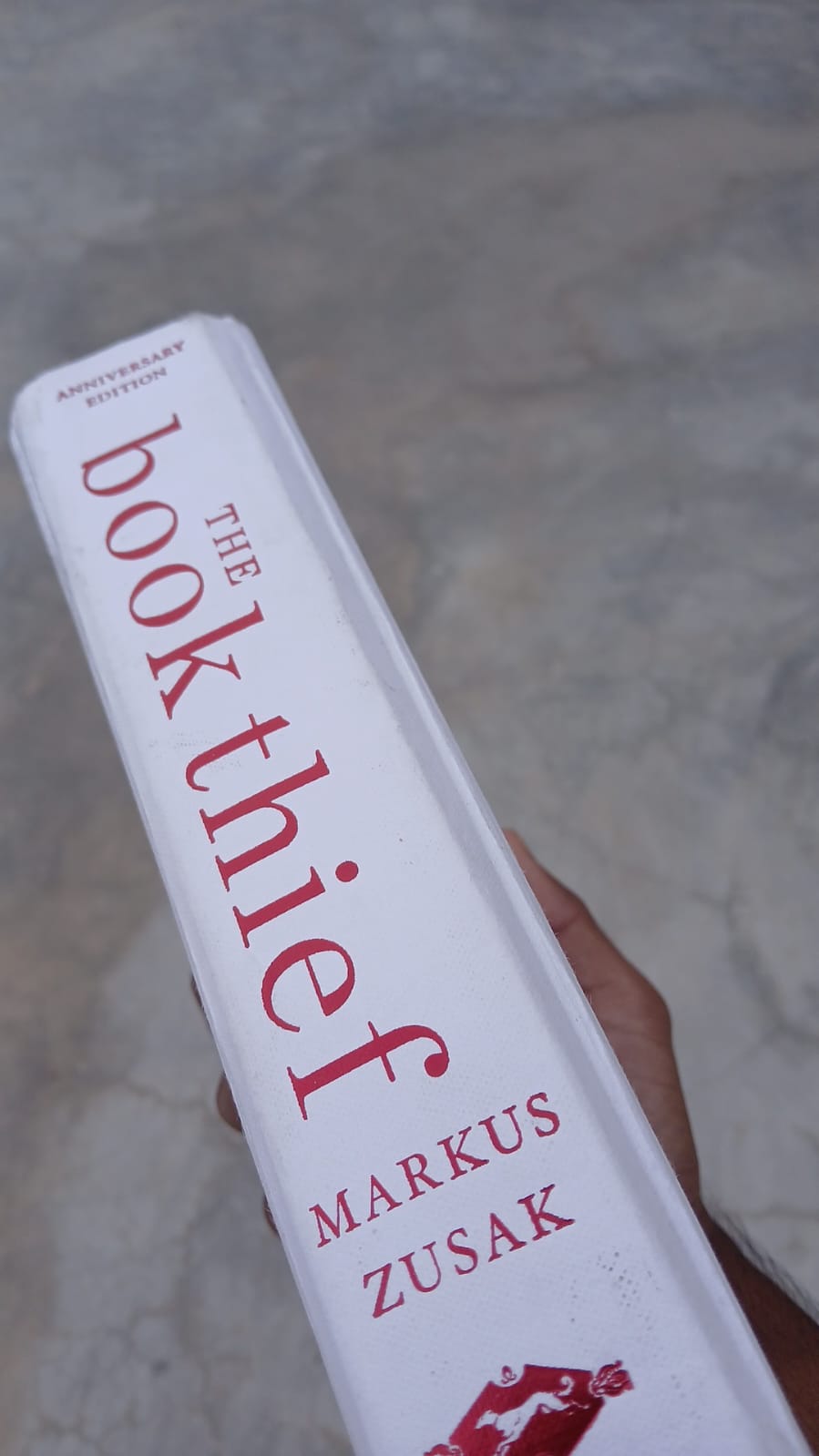
I recently read Markus Zusak’s The Book Thief, first published in 2005, and this is simply my personal take on the book. There are some spoilers ahead.
“I Am Haunted by Humans“
I knew The Book Thief was going to be sad even before I started reading it. It is one of those books where people almost warn you before you read it. Nazi Germany, a little girl, a Jewish man hiding in a basement, books, war, and Death as the narrator. So I already knew that something bad was waiting for me. But after finishing it, the thing that stayed with me was not really the war or even the deaths. It was the people. And that is funny because Death is the narrator of this whole story. You would think a book narrated by Death would make you think about death, but somehow it made me think much more about humans.
“I am haunted by humans.”
I didn’t completely understand this line when I first came across it. It sounded good, but after finishing the book, it started making more sense. Death has seen everything. He has seen people die in wars, he has seen people being cruel to each other, and he has probably seen more of humanity than any human ever could. Still, he keeps watching us. He notices little things about people. He notices colours, conversations, small acts of kindness, stupid things people do, and the way people behave when they are afraid. Sometimes he almost sounds tired of humans and sometimes he sounds strangely interested in them. That was one of my favourite things about having Death as the narrator. He knows exactly what happens to everyone, but he still seems interested in what they do before it happens.
And that also explains something I found strange while reading the book. Death keeps telling us what is going to happen. He gives away things that normally a writer would try to hide from the reader. At first I thought, why are you telling me this? I don’t want to know. But after a while I realised that the book was not really asking me to be surprised. It was asking me to watch. Even when I knew something bad was coming, I still wanted the characters to have more time. I knew a moment was going to end, but I still wanted it to continue. I knew people were not going to stay forever, but I still became attached to them. And that made the ordinary parts of the story feel different. A conversation between Liesel and Hans doesn’t feel like just another conversation when you know that there is a future waiting for them. A small moment with Max doesn’t feel small anymore. You start noticing these things because you know they will not last.
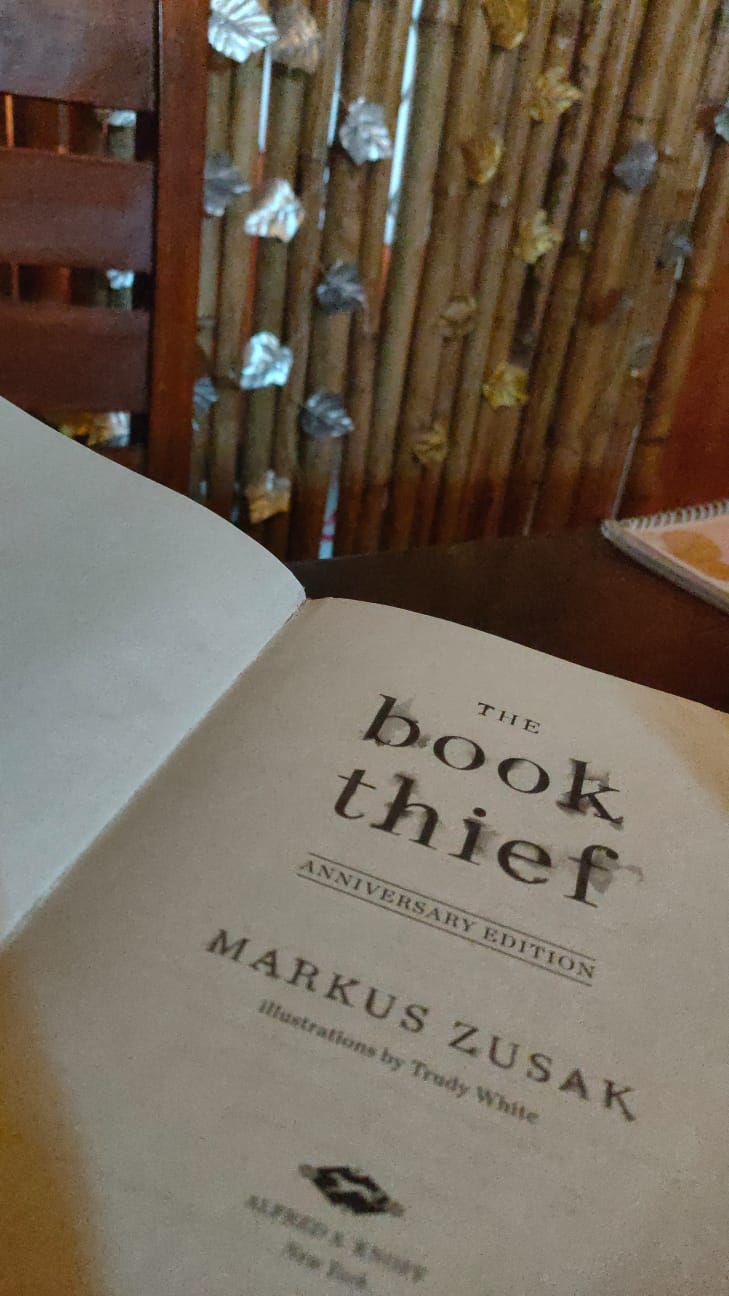
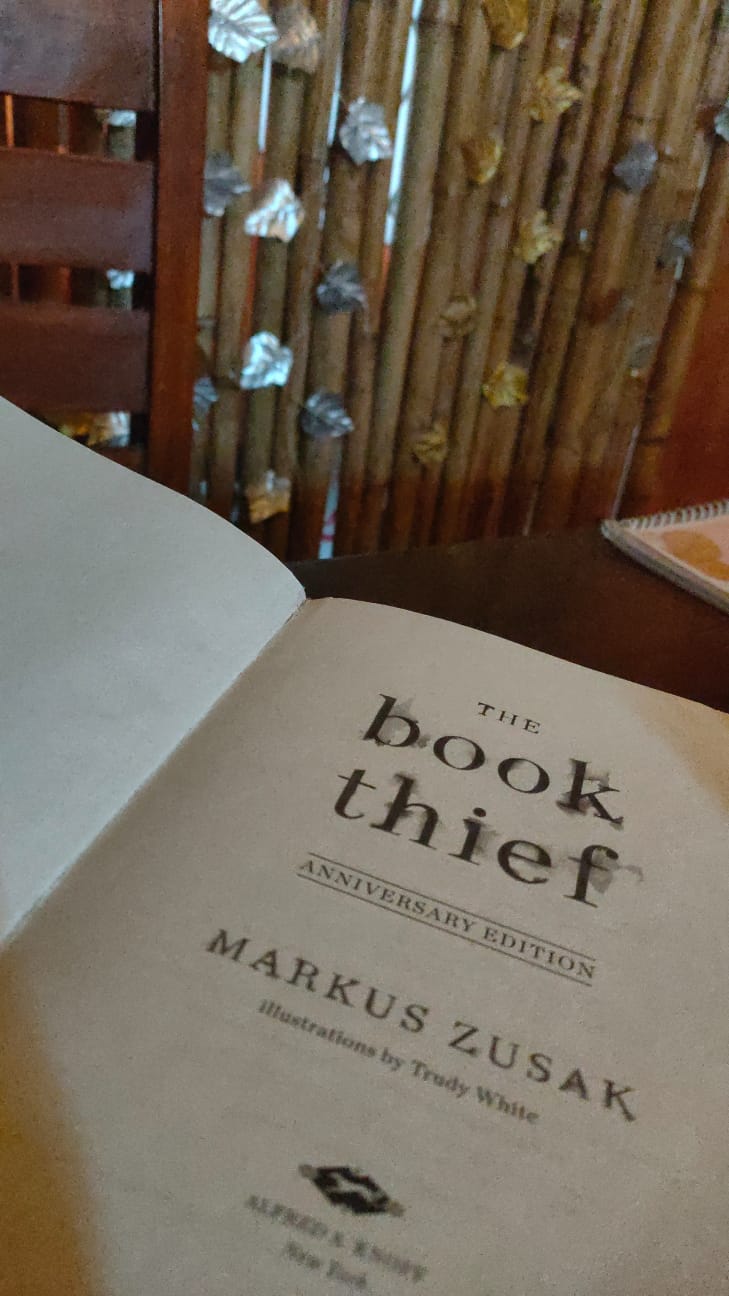
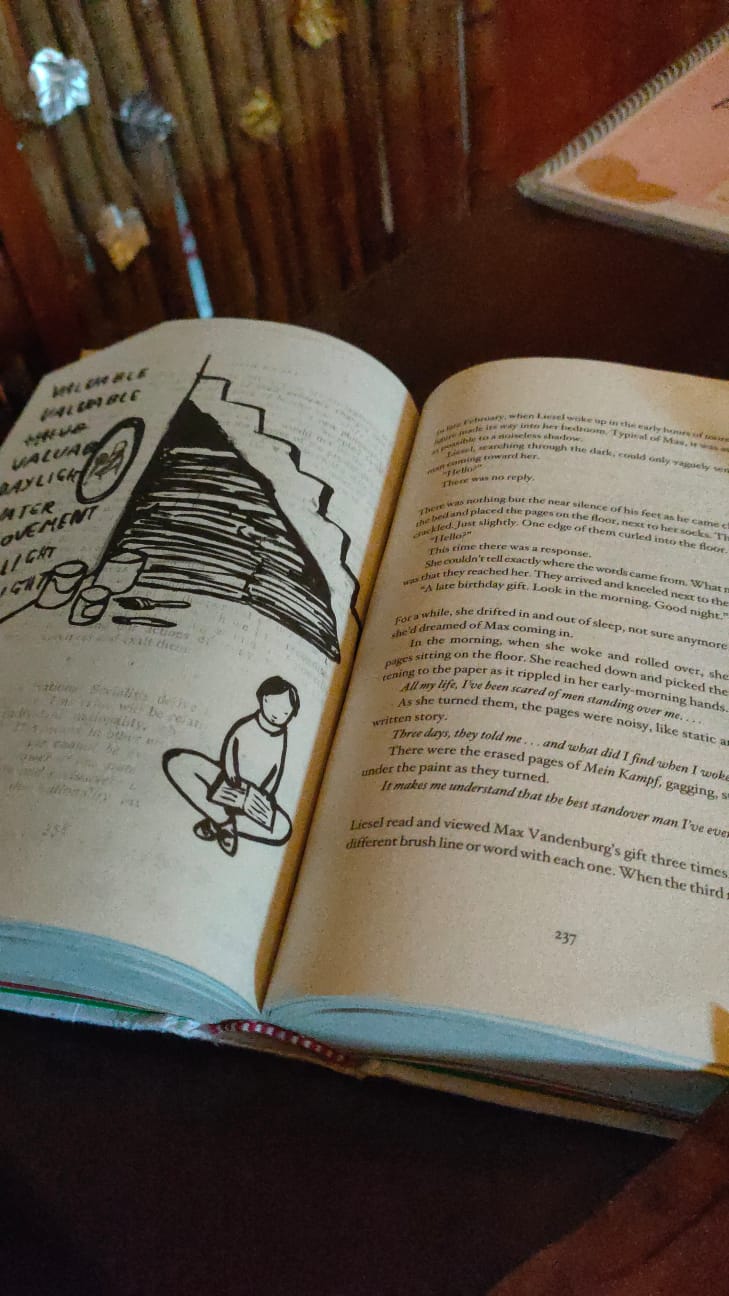
That is probably why Liesel’s books also mean more than just books. It would be very easy to say that Liesel is a girl who loves reading, but I don’t think that is really what her story is about. She is growing up in a place where almost everything is being decided for her. What she should believe, who she should hate, what she should read, what she should think about other people. And at the same time, she is learning the power of words. That part really stayed with me because the book doesn’t make words look completely innocent. Words can be beautiful, but they can also be dangerous. Hitler understood that very well. He used words to make people believe things, to create hatred and to decide who belonged and who didn’t. Liesel is learning the same power of words, but she slowly uses it in another way. For her, words become a way of understanding things, a way of remembering people and sometimes just a way of getting through a bad day. She starts by stealing books, but somewhere along the way she becomes someone who can use words for herself. She isn’t just reading other people’s stories anymore. She is becoming capable of telling her own.
This is also why Hans Hubermann became one of my favourite characters. He doesn’t feel like a hero from a story. He is just a good man, and somehow that feels more important here. His kindness is mostly in small things. He teaches Liesel to read, sits with her when she is scared, plays his accordion and gives her the feeling that she is safe. Then he hides Max, knowing very well what could happen if anyone finds out. There is no big heroic moment where he suddenly becomes a hero. He just makes one decision and then another. He sees a person who needs help and helps him. In a world where people are being taught to stop seeing each other as people, that becomes a very dangerous thing to do. I think that is what makes Hans so memorable to me. His goodness doesn’t feel perfect or dramatic. It feels like the kind of goodness that can actually exist in real life.
Max and Liesel’s friendship has the same feeling. They are both lonely, just in completely different ways, and somehow they find each other through stories and words. Max is hiding in a basement, and that basement could have been nothing more than a place where he was waiting for something terrible to happen. Instead, it becomes a place where he and Liesel can talk, imagine things and become friends. I liked that because the book doesn’t treat stories as magical things that can fix everything. The war is still outside. Max is still hiding. People are still dying. Nothing has really changed. But for a little while, they have somewhere else to be. I think that is sometimes what books actually do for us too. They don’t fix what is happening in our life. They just give us somewhere to go for a while.
And the war in The Book Thief becomes more disturbing because it is always mixed with ordinary life. It isn’t only soldiers and bombs. It is people being hungry, people waiting for someone to come home, people disappearing, people being scared to say the wrong thing. Children are still playing while all of this is happening. Families are still having dinner. People still fall in love. Someone still makes a joke. And somewhere else, someone is dying. That is what made the war feel so close to me. It didn’t feel like something happening far away in history. It felt like something that slowly entered people’s normal lives until there was no normal life left.
By the time I reached the end, I started thinking differently about Liesel stealing books too. She is obviously stealing books, but she is also taking something for herself in a world that keeps trying to decide everything for her. She keeps her imagination. She keeps her memories. She keeps learning words. She keeps writing. The world around her is trying to tell her what people are worth, but she keeps seeing people individually. Max is not just a Jew hiding in a basement to her. Hans is not just her foster father. Rudy is not just another boy in her street. They are people she knows and loves. And once you know someone personally, it becomes much harder to believe the things that the world is telling you about them.
That is probably what made the book hurt the most for me. Not the fact that I knew people would die, but the fact that by the time it happened, I cared about them. Death tells us what is coming, but he can’t make us care any less. In fact, he almost makes us care more because he keeps reminding us that these people have such little time. There is a line that says,
“It kills me, sometimes, how people die.”
And coming from Death, that line is almost strange. Death should be used to it. Death should not be surprised by people dying. But after watching all these people, even Death seems affected by them. He has seen humans at their worst, but he has also seen them do small things that make no sense in a world like this. Someone gives away bread. Someone hides a stranger. Someone sits beside a child. Someone tells a story. Someone keeps loving another person even when there is every reason to be afraid.
That is what I think I will remember about The Book Thief. It doesn’t make humans look good all the time. In fact, sometimes it makes us look horrible. But it also doesn’t allow us to forget the small good things people are capable of. The book puts both of these things together and doesn’t try to choose one. Humans can create terrible things and beautiful things. We can use words to destroy people and use the same words to bring someone comfort. We can be cruel and kind, sometimes within the same story.
I finished the book thinking about how strange it is that we know everything in our lives is temporary and still act like it isn’t. We make friends. We fall in love. We get attached to people. We make memories. We read books and underline sentences because something in them feels important to us. We keep photographs. We tell stories about people who are no longer here. We do all these things even though we know, somewhere in our heads, that one day everything will end.
And that brings me back to Death. He knows the ending before we do. He knows exactly where everyone is going. But he still watches what happens in between. He watches Liesel read. He watches Hans play the accordion. He watches Max dream. He watches people share bread and people destroy each other. He watches all of it, and somehow humans still manage to surprise him.
I think that is what The Book Thief became for me. It is not just a book about war, and it is not really a book about death either. It is about what people do while knowing, even if they don’t think about it every day, that everything they love is temporary. They still love it anyway. They still live anyway. They still tell stories anyway.
I think that is why Death says he is haunted by humans. Not because we die ;
But because we know we will, and we still somehow find reasons to keep living.
And that is probably the most human thing in the whole book.

Leave a Reply